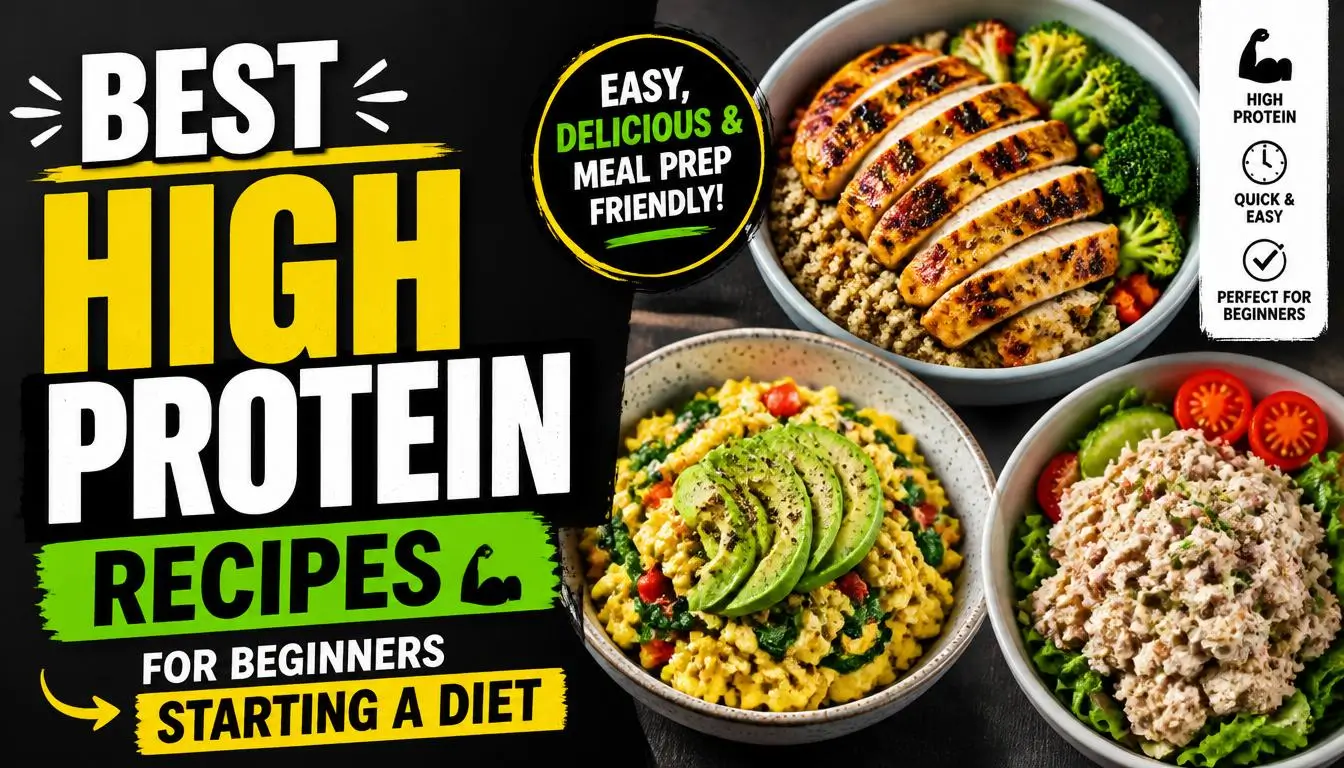
Finding the best high protein recipes for beginners starting a diet felt incredibly frustrating when I first tried eating healthier. Every recipe online assumed I already owned a food scale. They expected me to know all about macros. They also seemed to require a massive spice rack. I had none of those things. My kitchen consisted of a simple frying pan and a tight grocery budget. I also possessed a stubborn refusal to eat another dry piece of chicken. So I figured things out the hard way. These are the meals that actually stuck around.
1. Simple Scrambled Eggs With Spinach and Feta
You probably already have a carton of eggs in your fridge. That makes this the easiest place to start. Three large eggs deliver about 18 grams of protein before you add another ingredient. Throw in a handful of fresh spinach along with a spoonful of crumbled feta. Now you have a solid meal ready in five minutes.
The real trick is cooking your eggs on low heat. Most people blast the burner on high. That just creates rubbery chunks. Keep the flame low. Stir the eggs gently with a spatula. Pull them off the stove while they still look a bit wet. The residual heat will finish the job on your plate. I make this three mornings a week. The feta adds the perfect hit of saltiness so I never get tired of eating it.
2. Greek Yogurt Parfait With Peanut Butter
Greek yogurt quietly packs a ton of protein without requiring any real effort. A single cup of plain Fage 0% contains around 18 grams of protein. Layer that with a spoonful of natural peanut butter and a scoop of granola. You suddenly have a breakfast that tastes like an actual dessert.
I avoided Greek yogurt for years. I kept buying the sugary flavored versions that act more like candy. Plain yogurt tastes tangy right out of the container. Adding a drizzle of honey and some peanut butter completely transforms the flavor. Stir in a scoop of vanilla protein powder first if you need an extra boost. This specific bowl convinced me that eating healthy could actually taste good.
3. One-Pan Chicken Thighs With Roasted Vegetables
Chicken thighs completely changed how I cook meat. They cost less than chicken breasts. They are also much harder to overcook. Best of all, they actually have flavor without needing heavy sauces. Season your chicken with a generous amount of olive oil and garlic powder. Add a heavy pinch of paprika. Throw the meat on a sheet pan next to some chopped broccoli and sweet potatoes. Roast the whole tray at 425°F for about 25 minutes.
Cooking on a single pan leaves you with just one thing to wash. A sink full of dirty dishes kills my motivation faster than anything else. Each thigh offers roughly 26 grams of protein. The roasted vegetables provide enough fiber to keep your stomach quiet for hours. I usually bake six thighs on Sunday to eat throughout the week.
4. Canned Tuna Salad Wrap
I know canned tuna sounds incredibly boring. Give it a chance anyway. Take a can of chunk light tuna and mix it with Greek yogurt instead of mayonnaise. Add some diced celery for crunch. Squeeze a fresh lemon over the top. Roll the mixture up inside a whole wheat tortilla. You just made a 30-gram protein wrap in under three minutes.
I learned the Greek yogurt swap from a fitness forum a long time ago. It adds extra protein while dropping a ton of the fat you get from regular mayo. Brands like Starkist or Bumble Bee work perfectly for this. I actually keep a few cans hidden in my desk drawer at the office. They save me from visiting the vending machine on days I forget to pack lunch.
5. Turkey and Black Bean Skillet
Ground turkey cooks just as fast as ground beef while staying a lot leaner. Brown a pound of 93% lean turkey in your favorite skillet. Pour in a drained can of black beans and some diced tomatoes. Season the pan with cumin and chili powder. Add a dash of cayenne pepper if you like things spicy. Let the whole mixture simmer for ten minutes.
This skillet provides roughly 35 grams of protein per serving. One batch makes enough food for four meals. You can serve it over a bed of white rice. You might prefer rolling it into a warm tortilla. Sometimes I just eat it straight from a bowl topped with shredded cheese. I cooked this dish during my very first week of trying to eat better. It quickly earned a permanent spot in my kitchen. The beans add plant-based protein and plenty of filling fiber.
6. Overnight Protein Oats
Overnight oats require absolutely zero cooking skills. There is no actual cooking involved at all. Grab a glass jar. Pour in half a cup of rolled oats and a scoop of chocolate protein powder. Add a cup of milk and a spoonful of chia seeds. I prefer using Fairlife milk to get a little more protein. Stir it up and put the jar in your fridge before going to sleep.
You can eat it cold the next morning. You can also heat it in the microwave for a minute. Every jar holds about 40 grams of protein depending on your specific powder. Optimum Nutrition’s Double Rich Chocolate is my favorite brand. It dissolves easily without leaving powdery clumps behind. Toss a few sliced bananas on top. This meal takes no morning effort. That convenience makes it one of the best high protein recipes for beginners starting a diet.
7. Cottage Cheese and Fruit Bowl
Cottage cheese suffered from a terrible reputation for a long time. It has definitely made a massive comeback lately. A single cup of Good Culture or Daisy brand delivers about 25 grams of protein. Try pairing it with a handful of fresh berries. Add a quick drizzle of honey. Toss some slivered almonds on top for a nice crunch.
You should try blending your cottage cheese if the chunky texture bothers you. Blending it creates a smooth consistency very similar to ricotta. Most people who hate cottage cheese change their minds after trying it whipped. I rely on this bowl as a quick afternoon snack. My energy usually crashes around three o’clock. The high protein content keeps my stomach full until dinner time so I skip the potato chips.
8. Shrimp Stir-Fry With Frozen Vegetables
Frozen shrimp is a highly underrated protein source for beginners. You can grab a big bag at Costco or Trader Joe’s. A portion thaws in cold water in about fifteen minutes. The shrimp then cooks in just three minutes. A six-ounce serving packs roughly 36 grams of protein. Toss those shrimp into a hot pan with a splash of sesame oil. Dump in a bag of frozen stir-fry vegetables. Finish the dish with a couple of spoonfuls of low-sodium soy sauce.
Your entire meal comes together in less than twenty minutes. Eat it over a bowl of microwave rice. You can also just eat the stir-fry plain. I felt genuinely shocked the first time I cooked this at home. It tasted exactly like an expensive takeout order. Buying pre-chopped frozen vegetables means you skip all the annoying prep work entirely.
9. Protein Smoothie With Banana and Spinach
Buying a decent blender is a smart move for anyone changing their diet. Smoothies make hitting daily goals very easy. Drop a scoop of vanilla protein powder into your blender pitcher. Add one frozen banana and a big handful of raw spinach. Pour in a cup of almond milk along with a spoonful of almond butter. Blend everything for thirty seconds.
You end up with a 30-gram protein shake that tastes remarkably like a milkshake. The green spinach color remains but the leafy flavor completely disappears. You will not taste the vegetables at all. I blend one of these right after my morning workouts. Sometimes I use it as a meal replacement when cooking feels like too much work. The frozen banana matters here. It thickens the liquid naturally without requiring ice cubes that water down the flavor.
10. Baked Salmon With Lemon and Garlic
Cooking salmon intimidated me for a really long time. It felt like an advanced kitchen skill. Baking a piece of fish is actually incredibly easy. Put a salmon fillet on a lined baking tray. Drizzle a little olive oil across the top. Squeeze the juice from half a fresh lemon over the meat. Rub some minced garlic into the flesh before adding salt and pepper. Bake the tray at 400°F for roughly 12 to 15 minutes.
A six-ounce cut provides about 34 grams of protein. You also get a dose of healthy fats for your brain. The lemon juice and garlic form a natural sauce in the oven. This keeps the fish perfectly moist without any special culinary techniques. I like to eat mine with a quick side salad. You can buy wild-caught salmon frozen at places like Aldi to keep your grocery bills low.
Frequently Asked Questions
How much protein should a beginner aim for each day?
A good starting point is 0.7 to 1 gram of protein per pound of body weight. An adult weighing 160 pounds would aim for 112 to 160 grams every day. You do not need to track every single gram right out of the gate. Focus on putting a protein source on your plate at every meal. The numbers will naturally add up over time. Obsessive tracking often causes people to quit early.
What are the cheapest high protein foods for beginners?
Eggs and canned tuna are extremely budget-friendly options. Cottage cheese and Greek yogurt also cost very little per serving. Frozen chicken thighs are another cheap staple. You can usually find a dozen eggs for about three dollars at a local grocery store. Every single egg contains six grams of protein. Buying dry black beans and lentils is another great way to secure affordable plant protein.
Can I meal prep these best high protein recipes for beginners starting a diet?
Yes, you can prep almost all of these dishes. The chicken thighs work perfectly for batch cooking. The turkey skillet is practically designed to sit in the fridge for days. You can also make a whole week of overnight oats at once. Cook a large batch on Sunday afternoon. Put portions into glass containers. You will have grab-and-go food ready for the work week. Having pre-made food eliminates daily decision fatigue. That fatigue is the exact reason many beginners abandon their diet plans in the first week.
Do I need protein powder to eat high protein?
No, you definitely do not need it. A tub of protein powder offers a lot of convenience. Whole foods like chicken and fish can easily meet your daily goals instead. Eggs and dairy products work just as well. I keep protein powder around for quick smoothies and oatmeal bowls. It saves me time on busy mornings. Many people reach their nutritional targets without ever buying dietary supplements. Treat powder as an optional tool rather than a strict requirement.
What if I get bored eating the same high protein meals?
Change up your spices and sauces on a regular basis. A plain chicken thigh transforms completely when you add a dash of taco seasoning. Using a sticky teriyaki sauce creates an entirely different flavor profile. Keep a few distinct spice blends sitting on your counter. Rotate through them as the days go by. This tiny change keeps your food interesting. You will not have to memorize a bunch of new recipes every weekend.
Conclusion
Changing your diet does not require a culinary degree. You do not need a pantry stuffed with weird ingredients either. These simple meals helped me survive my first few months of eating better. Many of them remain in my regular cooking rotation today. Pick one simple dish and give it a try in your own kitchen.